 Digital Onboarding
  AML
AML  Credit Analysis
  Card Issuance
  Payment Dispersion
  Notifications
  Collections
  Bill Payment
  Alternative Scoring
  Device Lock
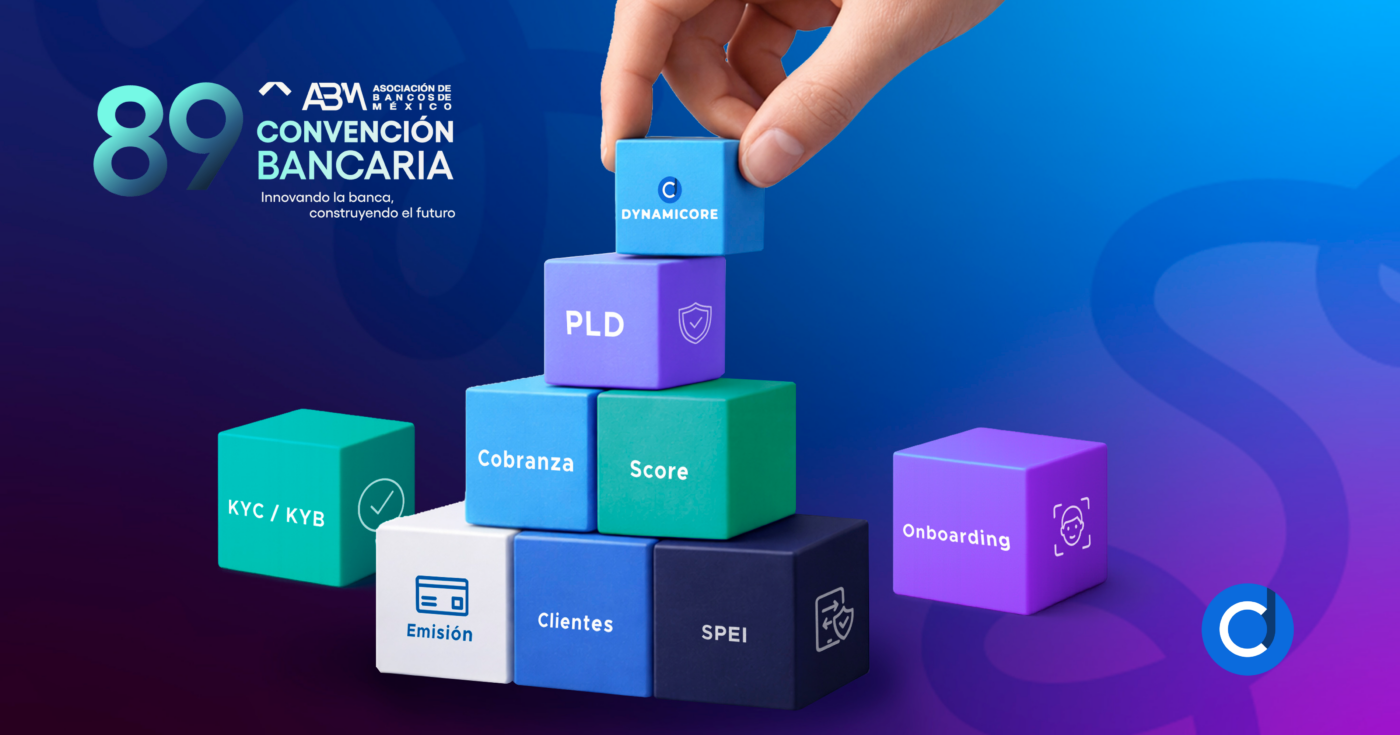
Financial services are changing quickly. Digital adoption, rising customer expectations, and constant pressure to innovate are forcing institutions to rethink the system at the center of their operations: the core banking platform.
The future is moving away from rigid monoliths and toward modular, open, and scalable ecosystems.
Why core banking is evolving
A core banking system manages essential processes such as customer accounts, transactions, loans, payments, and financial products. Legacy platforms were designed for stability, but many are expensive to update, difficult to integrate, and slow to adapt.
Modern institutions need the opposite: faster product launches, seamless third-party connections, elastic growth, and digital experiences built around the customer.
The modular core banking model
A modular platform separates capabilities into independent components that communicate through well-defined APIs. Institutions can activate the services they need, replace individual components, and expand progressively without rebuilding the entire operation.
- Shorter implementation cycles
- Faster integration with fintech and technology partners
- Greater adaptability to market and regulatory changes
- Lower dependence on legacy systems
From isolated systems to financial ecosystems
Banking is increasingly collaborative. Banks, fintechs, payment providers, identity services, and digital platforms must exchange data and coordinate processes securely. A modern core should enable this ecosystem instead of becoming its bottleneck.
Five benefits of a modern core
1. Faster innovation
Reusable modules and APIs shorten the time required to launch or test a financial product.
2. Better customer experiences
Real-time data supports personalized and consistent experiences across channels.
3. Operational efficiency
Automation and centralized information reduce manual work and technology complexity.
4. Scalable growth
The platform can support rising customer and transaction volumes without structural redesign.
5. Interoperability
Open interfaces make it easier to connect specialized providers and new services.
Core banking as a competitive advantage
The core is no longer only an operational engine. It determines how quickly an institution can respond, launch products, manage compliance, and enter new markets.
Dynamicore’s modular core banking platform is designed to help financial institutions build open ecosystems, automate operations, and scale at their own pace.
Follow Dynamicore on Instagram, Facebook, and LinkedIn for more financial technology insights.