 Digital Onboarding
  AML
AML  Credit Analysis
  Card Issuance
  Payment Dispersion
  Notifications
  Collections
  Bill Payment
  Alternative Scoring
  Device Lock
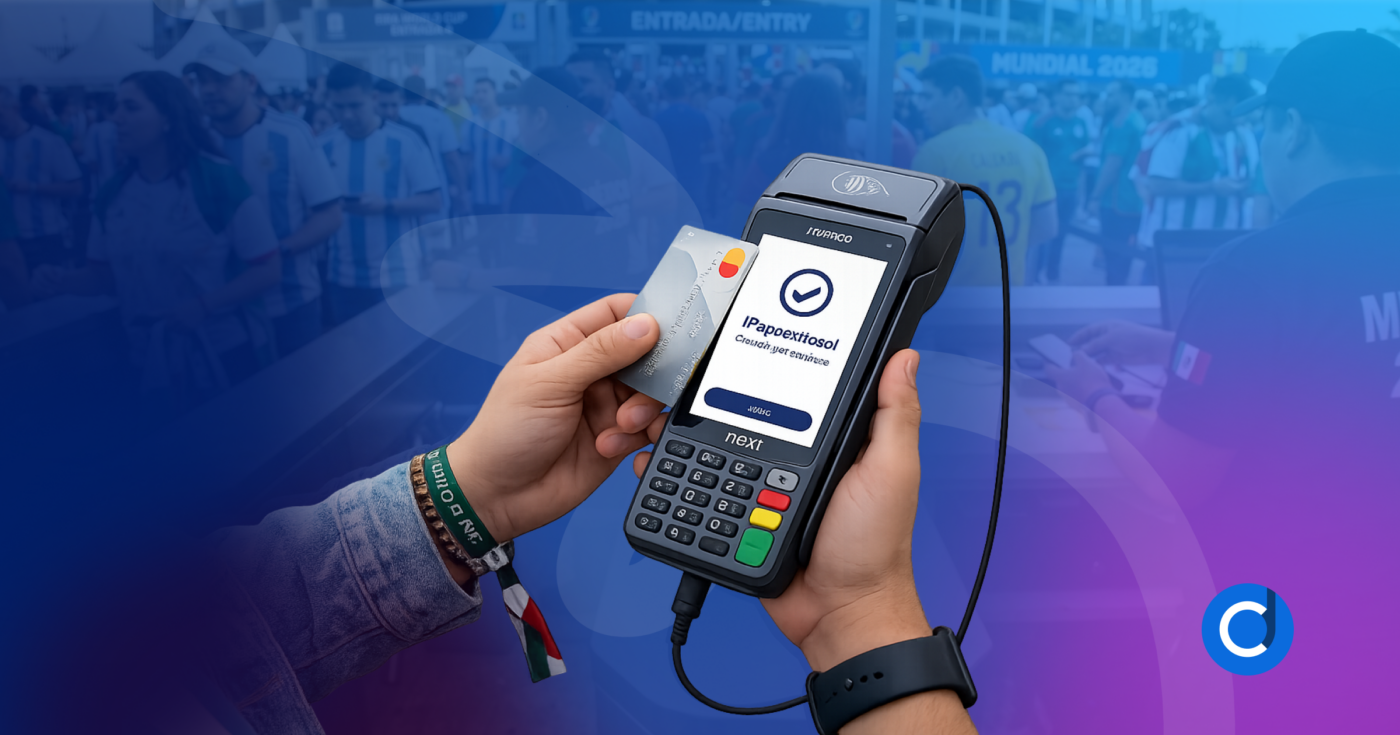
The 2026 World Cup is more than a sporting event for the United States, Mexico, and Canada. It is also a large-scale test for digital payment infrastructure, where venues and surrounding businesses must handle high transaction volumes quickly and securely.
For visitors accustomed to tapping a card or phone, contactless payment is an expectation. For financial institutions and payment providers, the tournament highlights the need for real-time processing, reliable integrations, and scalable systems.
Payment methods shaping the 2026 World Cup experience
1. Contactless cards
Tap-to-pay credit and debit cards provide a fast checkout experience and help merchants serve large crowds with shorter transaction times.
2. Mobile wallets
Apple Pay, Google Pay, and other supported wallets let customers use tokenized cards from their phones. International travelers often expect their existing wallet to work without a new enrollment process.
3. Wearable payments
Smartwatches and other compatible devices extend contactless payments beyond cards and phones, offering another convenient option for visitors.
4. Account-to-account and instant payments
Real-time payment networks and bank transfers can support use cases beyond the point of sale, including person-to-person transfers, merchant settlement, and digital services. Availability depends on the institution, network, and merchant integration.
5. QR-based payments
QR codes can connect customers to wallets, bank transfers, or hosted checkout pages. The experience must be clear, secure, and optimized for mobile devices.
6. Traditional cards and cash alternatives
Cashless environments still need inclusive alternatives for visitors who do not have an accepted card or wallet. Prepaid products, gift cards, or cash-to-card solutions can help reduce access barriers.
What high-volume events require from financial infrastructure
- Real-time, 24/7 operation: payments cannot depend on banking hours.
- Elastic capacity: systems must withstand transaction spikes before, during, and after matches.
- Tokenization and security: card and wallet credentials require strong protection.
- API connectivity: institutions need flexible integrations with processors, networks, wallets, and fraud tools.
- Operational visibility: teams need timely status, reconciliation, and exception management.
- Compliance by design: new payment products must follow applicable rules from launch.
How financial institutions can prepare
Institutions do not need to rebuild their entire operation for one event. They should confirm that their core can connect to the relevant payment rails, launch or adjust products quickly, reconcile transactions automatically, and maintain performance under peak demand.
The long-term opportunity is larger than the tournament. Infrastructure and customer habits developed around a global event can continue influencing everyday payments afterward.
DynamiCore builds modular, API-first banking core infrastructure designed to integrate payment services, support digital products, and centralize financial operations with security and scalability.