 Digital Onboarding
  AML
AML  Credit Analysis
  Card Issuance
  Payment Dispersion
  Notifications
  Collections
  Bill Payment
  Alternative Scoring
  Device Lock
Traditional core systems were built for stability, but many now limit innovation with rigid processes, expensive maintenance, and difficult integrations. Moving to a digital core is an operating-model transformation, not simply a software replacement.
What limits a traditional core?
- Manual and slow processes
- Long product-launch cycles
- Complex integrations
- High maintenance costs
- Limited adaptability
What defines a digital core?
A digital core uses modular capabilities, APIs, automation, and real-time data. Institutions can configure products, connect specialized providers, and scale without rebuilding the complete platform.
How the operation changes
- Customers complete digital onboarding and identity checks.
- Scoring and risk services support the credit decision.
- The core creates and manages the product.
- Payments and collections update balances in real time.
- Automated communications keep customers informed.
Five business benefits
- Greater agility and control
- Scalable infrastructure
- Faster integration of new modules
- More consistent compliance workflows
- Better customer and employee experiences
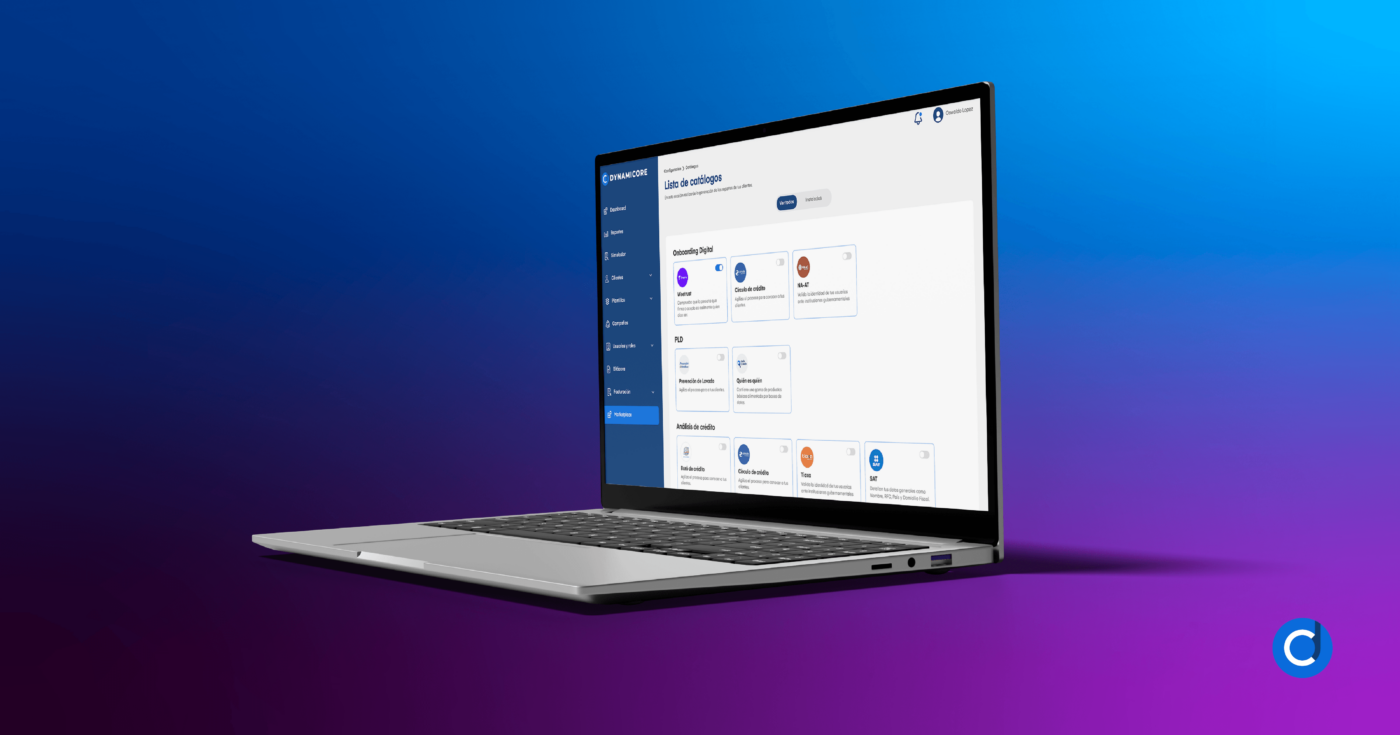
Dynamicore provides a modular digital core that connects onboarding, credit, portfolios, collections, payments, and reporting in one platform.