 Digital Onboarding
  AML
AML  Credit Analysis
  Card Issuance
  Payment Dispersion
  Notifications
  Collections
  Bill Payment
  Alternative Scoring
  Device Lock
For many financial institutions, the biggest onboarding challenge is not attracting prospects—it is getting them to complete their application. Long forms, repeated requests for information, and slow verification often cause qualified applicants to leave before finishing.
Digital onboarding is therefore more than an online registration process. When designed well, it becomes a strategic capability that increases conversion, strengthens fraud prevention, and improves operational efficiency.
What does high-converting digital onboarding mean?
An effective process does not collect the most information. It collects the right information at the right time with the least possible friction.
That requires balancing three priorities: customer experience, fraud prevention, and regulatory compliance. If any one of them fails, abandonment and operational risk increase.
How to design digital onboarding that converts
1. Reduce friction from the first interaction
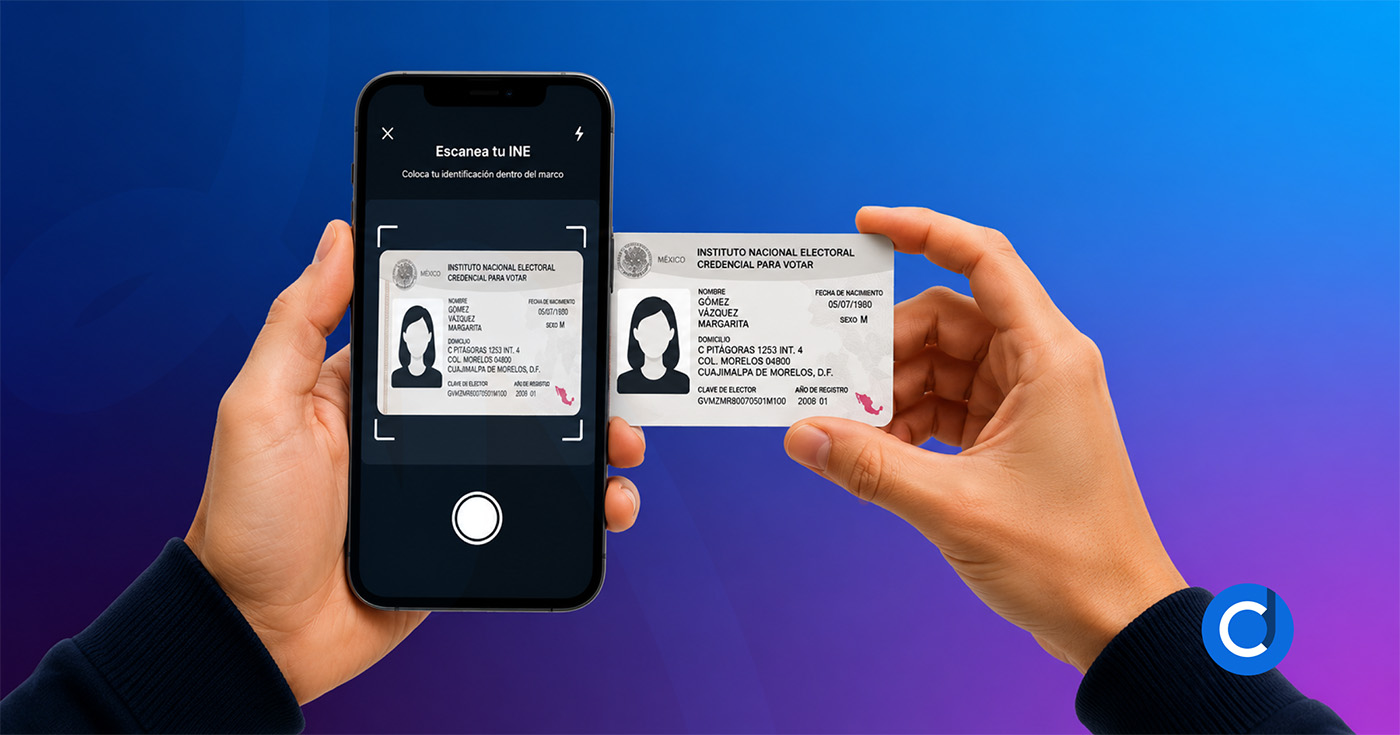
A common mistake is requesting too much information at the beginning. A better process captures only the essential data for each step and uses automation wherever it improves speed and accuracy.
- Optical character recognition (OCR) for documents
- Smart autofill
- Real-time validation
- Secure reuse of previously verified data when appropriate
The less effort the application requires, the more likely a prospect is to complete it.
2. Automate identity verification
Identity verification is one of the most sensitive stages. Slow checks and multiple manual reviews can quickly create drop-off.
Financial institutions can streamline verification with facial biometrics, liveness detection, document validation, biometric matching, and automated screening against applicable sanctions, watchlists, and politically exposed persons (PEP) databases.
These controls improve the experience while helping prevent fraud at the beginning of the relationship.
3. Integrate compliance checks into the flow
Meeting compliance requirements does not have to mean adding unnecessary steps for the applicant. Know Your Customer (KYC), Anti-Money Laundering (AML), sanctions, and PEP checks can run automatically within the same journey.
This allows the institution to apply its regulatory controls without asking customers to repeat information or move between disconnected channels.
4. Automate low-risk decisions
Clear risk policies make it possible to automatically approve low-risk profiles and route only complex cases to specialized review.
This shortens response times, improves the customer experience, and lets analysts focus their attention where human judgment adds the most value.
5. Keep applicants informed
Many applications fail because communication stops during the process. Automated notifications through SMS, WhatsApp, or email can confirm completed checks, request missing documents, share progress, and communicate the final decision.
Keeping applicants informed reduces uncertainty and increases the likelihood that they will complete their application.
How to measure onboarding conversion
Track more than the number of applications started. Useful performance indicators include:
- Application completion rate
- Average time to complete onboarding
- Drop-off rate by step
- Average verification time
- Automated approval rate
- Manual review rate
Reviewing these metrics regularly helps teams identify bottlenecks and continuously improve the customer journey.
Digital onboarding as part of an integrated operation
Onboarding does not end when a customer creates an account. It connects identity verification, credit assessment, compliance, product origination, and customer communication in one operational flow.
DynamiCore provides a digital onboarding solution that integrates data capture, OCR, document verification, watchlist screening, credit analysis, and automation. It helps fintech companies and financial institutions onboard customers faster, strengthen fraud prevention, and improve conversion without compromising compliance.
Follow DynamiCore on Instagram, Facebook, and LinkedIn for more insights on financial innovation and automation.